
Narcotics Detection
A narcotics detection dog is what most people mean by a drug dog or a drug sniffing dog; the terms describe the same work. Our dogs are trained to find the odor of illegal drugs in vehicles, buildings, lockers, packages, and open areas. The dog works an area on lead with its handler and signals by sitting or standing still at the source. Nothing is damaged, opened, or torn into, and no person is searched or confronted at any point.
Narcotics is the longest-established of the detection disciplines, and its value is rarely the dramatic find. Deterrence does not depend on a find at all — it depends on an unannounced sweep being a genuine possibility, which is why a program you can repeat is worth more than any single result.
One honest note: a dog detects odor, which is not the same thing as detecting a physical item. Odor lingers on surfaces and in enclosed spaces after the source has gone, so an alert tells you something was there — not always that it is still there. We will explain what any given alert does and does not establish, rather than let you over-read it.
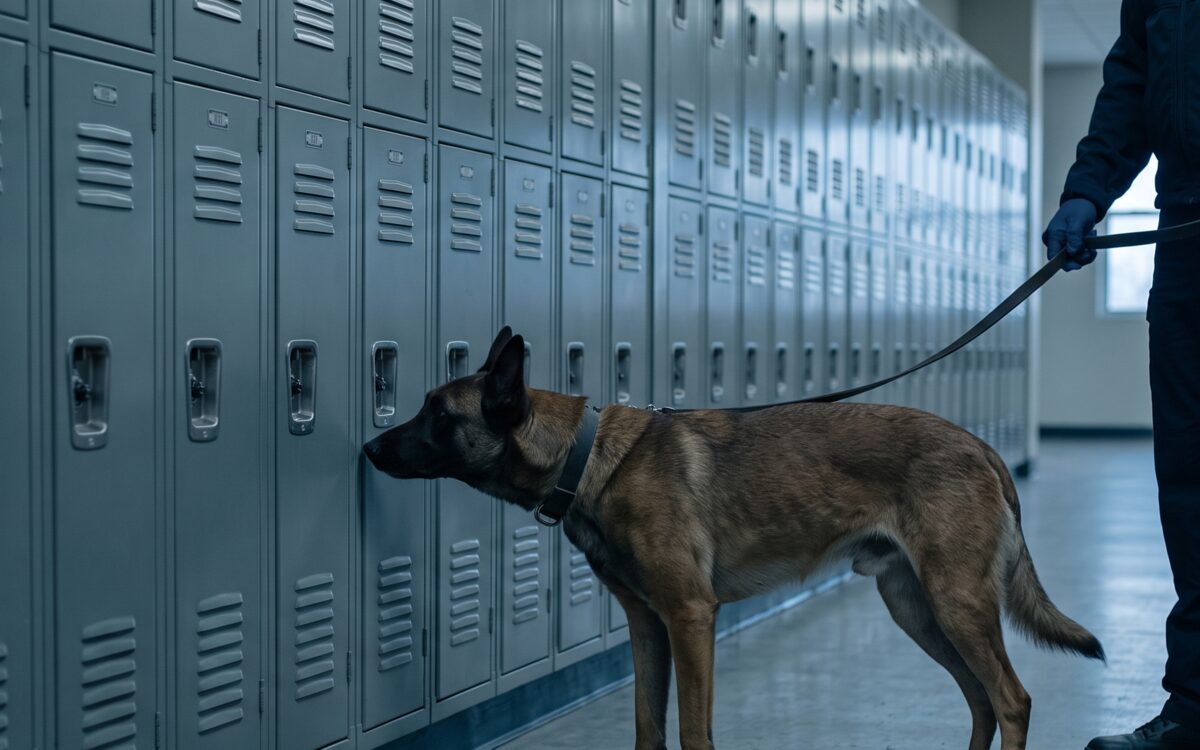
Commonly Used For — Narcotics Detection
- School and university campus sweeps
- Workplace drug-policy enforcement
- Treatment and correctional facility checks
- Vehicle and parking lot screening
- Warehouse, freight, and package screening
Explosives Detection
Explosives detection is the discipline behind the terms bomb dog and bomb sniffing dog. On an explosives sweep the dog checks vehicles, bags, venues, and buildings for explosive odors. This is the most demanding discipline in canine detection. The training standard is higher, the margin for error is smaller, and the work is almost always tied to a specific moment in time.
Timing is the part that is easiest to underestimate. Explosives work is scheduled ahead of something — before doors open, before a building is occupied, before a public event begins — and a sweep that finishes late has largely missed its purpose. We plan backwards from your deadline, not forwards from our arrival, and we will tell you honestly if the window you have in mind is too tight for the square footage involved.
Once an area has been swept and cleared, keeping it clear matters. If a space is left unattended and re-opened to general access before your event, its status has effectively changed. We will talk that through with your security lead when we agree on scope.
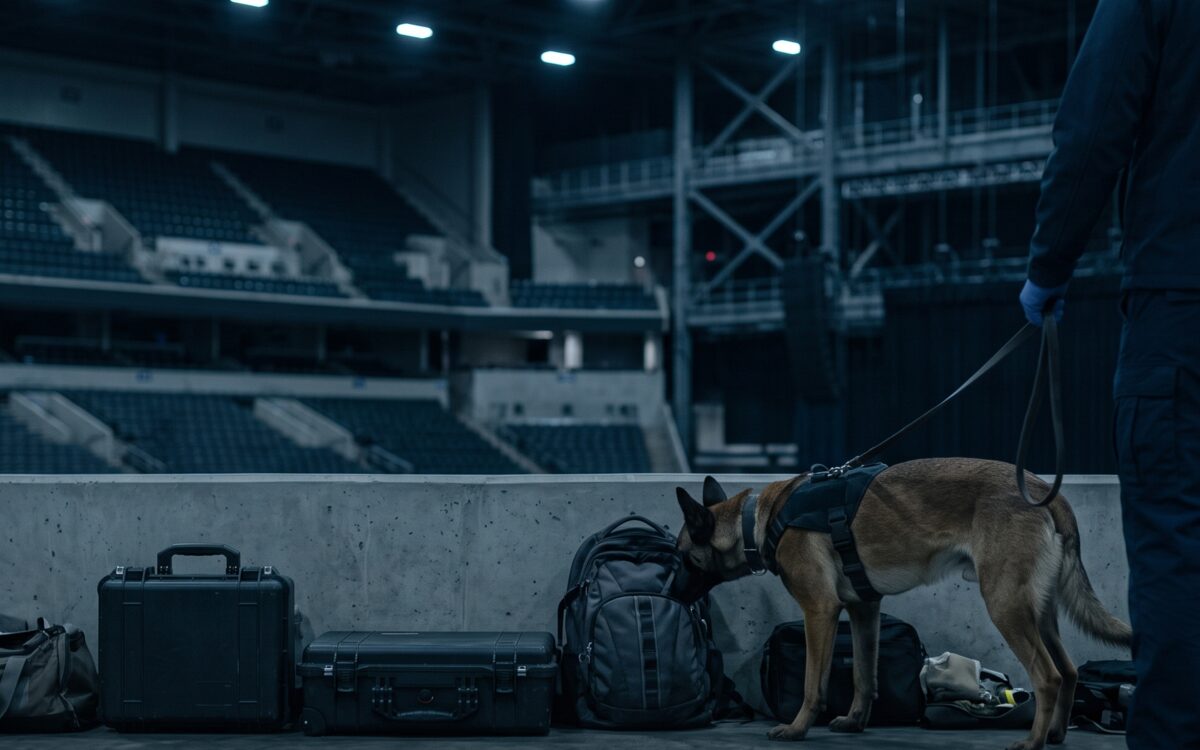
Commonly Used For — Explosives Detection
- Venue sweeps before an event opens
- Government buildings and courthouses
- Vehicle and bag checks at entry points
- Transportation and logistics facilities
- Pre-occupancy building checks
Firearms & Weapons Detection
Firearms detection is also called gun detection or weapons detection — though not gun dog, which in hunting means something else entirely. For firearms, the dog is trained to find the odor of firearms and ammunition — the propellants, solvents, and residues associated with them rather than the metal itself. It is a proactive layer of screening, run ahead of an incident rather than in response to one.
We should be straightforward about one thing. Firearms detection is among the newest specialties in this field, and unlike narcotics work there is no single nationwide certification standard that every agency and every provider agrees on. That is a fact about the discipline, not about any one vendor, and it is a reasonable thing to ask every provider you evaluate — including us — to address directly and in writing.
What we can tell you is concrete: our dogs are trained and evaluated on firearms odors — gunpowder and black powder among them — on the same schedule as every other odor group they work, and we will sit down and walk you through our training and evaluation records before you commit to anything at all.
And the boundary matters as much as the capability. A detection dog is one layer of a security program. It is not a metal detector, it is not a substitute for one, and it is not a substitute for the policies and people you already have. Any proposal that suggests otherwise is worth questioning closely.
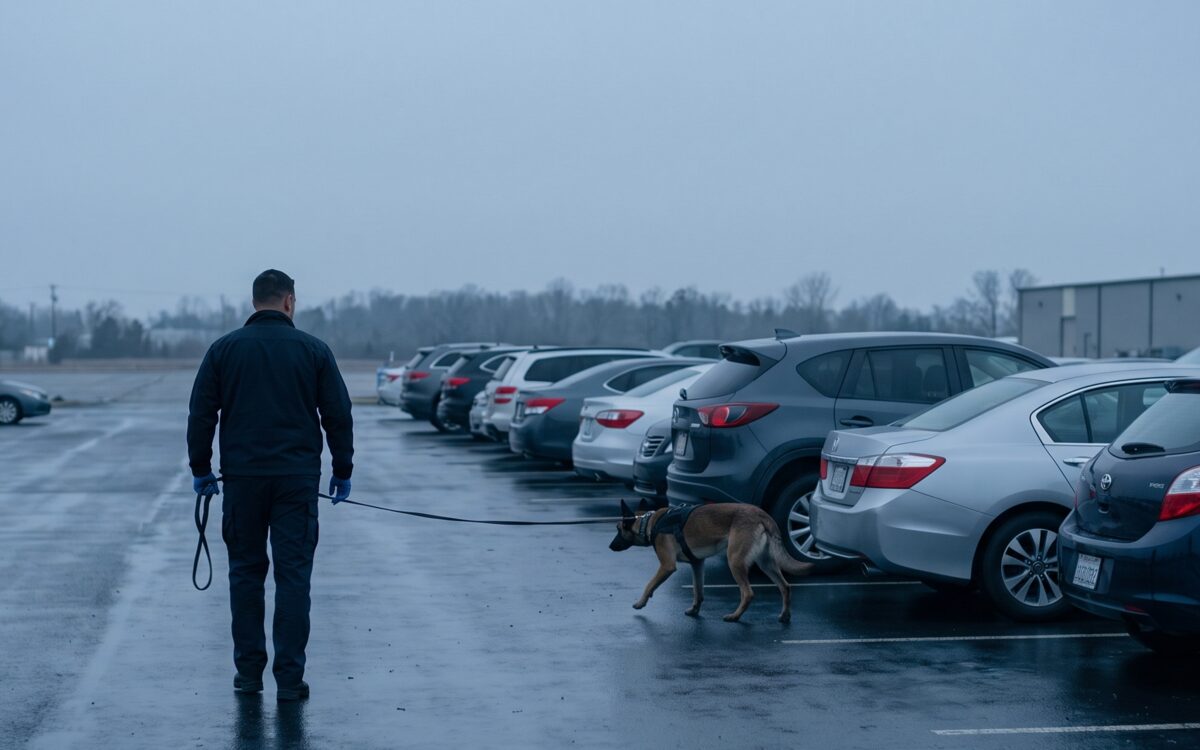
Commonly Used For — Firearms Detection
- Campus and school facility sweeps
- Event and venue entry screening support
- Parking lot and vehicle checks
- Added layer alongside existing security measures
Where We Work, and How Soon
K9IDS is based in California’s Central Valley and works across the entire United States. The Valley is our home region — Fresno, Clovis, Madera, Merced, Visalia, Hanford, Tulare, Porterville, Bakersfield, Modesto, and the communities around them — and it is where we are closest, so it is where a team can be on site soonest. Everywhere else in the country, we travel to you.
We are available 24 hours a day, by appointment. That is deliberate rather than incidental: a sweep that needs to happen before a shift change, overnight, or across a weekend should be set for the hour that suits your site, not the hour that suits ours. Lead time is under six hours, depending on distance, so if you need a team sooner than a booked date, call (559) 507-2076 rather than emailing.
Work outside our home region carries a two-day minimum engagement, because a team that travels that far is committed to your site for the trip. Where that boundary falls depends on the distance and the travel involved, so tell us where the site is and we will tell you plainly which side of it you are on — before you commit to anything.
What Booking Involves
- Scheduled 24 hours a day, by appointment
- Lead time under six hours, depending on distance
- Outside the home region, a two-day minimum engagement
- Certificate of insurance, licensing documentation, a W-9, and completed vendor packets on request
How a Sweep Actually Works
If you have never contracted a detection dog team before, here is exactly what happens, start to finish.
Walkthrough
Before the first visit we walk the site with you — in person, or over a map or floor plan when your site is a long way from us — agree on which areas are in scope, and identify anything the dog should stay away from.
Scheduling
You choose scheduled visits, unannounced visits, or a mix of both, and we agree on who at your organization is notified, and when. Visits are booked 24 hours a day, by appointment, so a sweep can be set for whatever hour suits your site. If you need one sooner than a booked date, lead time is under six hours, depending on distance.
The Sweep
A handler and one dog work the agreed areas. The dog signals by sitting or standing still at the source. There is no digging, no barking, and no contact with any person. We do not open or search anything ourselves.
Handover
Anything the dog signals on is pointed out to your designated contact on the spot. We do not open, move, or take custody of anything, and we do not contact law enforcement on your behalf unless you have asked us to in writing. Your staff decides what happens next — the handler stays available while you decide.
Written Report
You receive a written record of which areas were covered, when the visit took place, who was present from your side, and what the dog signaled on. It goes to your designated contact, and we do not share it with anyone else unless you ask us to or the law requires it.
Not Sure Which Service You Need?
Describe your facility, where it is, and what is concerning you. We will tell you honestly which service fits — or whether one fits at all.